


 es / us
 en / ca

You are permanently removing this notification from your Owner Site Notification Feed.
Do you wish to proceed?
Before towing a camper, boat, ATV or trailer, it is essential to understand trailering basics to ensure safety on the road. From calculating your vehicle’s towing capacity to properly distributing weight, these fundamentals help protect you, your passengers and others.
- Why Towing a Trailer Can Be Challenging
- Best Vehicles for Towing
- What Do the Classes Mean for Trailer Hitches?
- How to Calculate Towing Capacity (Step-by-Step)
- Proper Trailer Weight Distribution
- What Is Tongue Weight & Why It Matters
- Why Are There Different Sizes of Receivers, Hitch Balls and Couplers?
- Where Can You Purchase Towing Accessories?
- Glossary of Terms
For full details, see the Starting and Operating/Trailer Towing section within your owner’s manual – click here to find your owner’s manual online.
Why Towing a Trailer Can Be Challenging
Every vehicle has its maximum carrying/trailering capacity, which should never be exceeded. Since every trailer differs in size, weight and handling, it is important to do a little math to make sure you are safely within your vehicle’s limit.
Please see the Glossary of Terms for many of the terms we will be using at the end of this article to learn more.
Best Vehicles for Towing
The most popular Dodge, Jeep® and Ram Brand vehicles for towing are:
| Model | Max. Trailering* | Max. Avail. Payload* | Passenger Capacity | Vehicle Type |
|---|---|---|---|---|
| Ram 2500/3500 | 36,610 lbs. | 7,590 lbs. | 3 – 6 | Truck |
| Ram 1500 | 11,610 lbs. | 2,360 lbs. | 5 – 6 | Truck |
| Jeep® Grand Wagoneer | 10,000 lbs. | 1,490 lbs. | 7 – 8 | SUV |
| Dodge Durango | 8,700 lbs. | 1,590 lbs. | 5 – 7 | SUV |
| Jeep® Gladiator | 7,700 lbs. | 1,720 lbs. | 5 | Truck |
| Jeep® Grand Cherokee | 6,200 lbs. | 1,370 lbs. | 5 – 7 | SUV |
| Jeep® Wrangler | 3,500 lbs. | 1,381 lbs. | 4 – 5 | SUV |
*All ratings are for 2026 models and vary by model and equipment. When properly equipped. See dealer for details.
Choosing the right vehicle will depend on how many passengers you need to carry, if you need 4WD and how heavy your trailer is. Talk to your local Chrysler, Dodge, Jeep, or Ram dealer to find the right vehicle for your use.
What Do the Classes Mean for Trailer Hitches?
These classes ensure that you use the correct hitch for the weight you intend to tow:
- Class I (Light Duty): Up to 2,000 lbs.: bikes racks, cargo carriers, small jet ski trailers
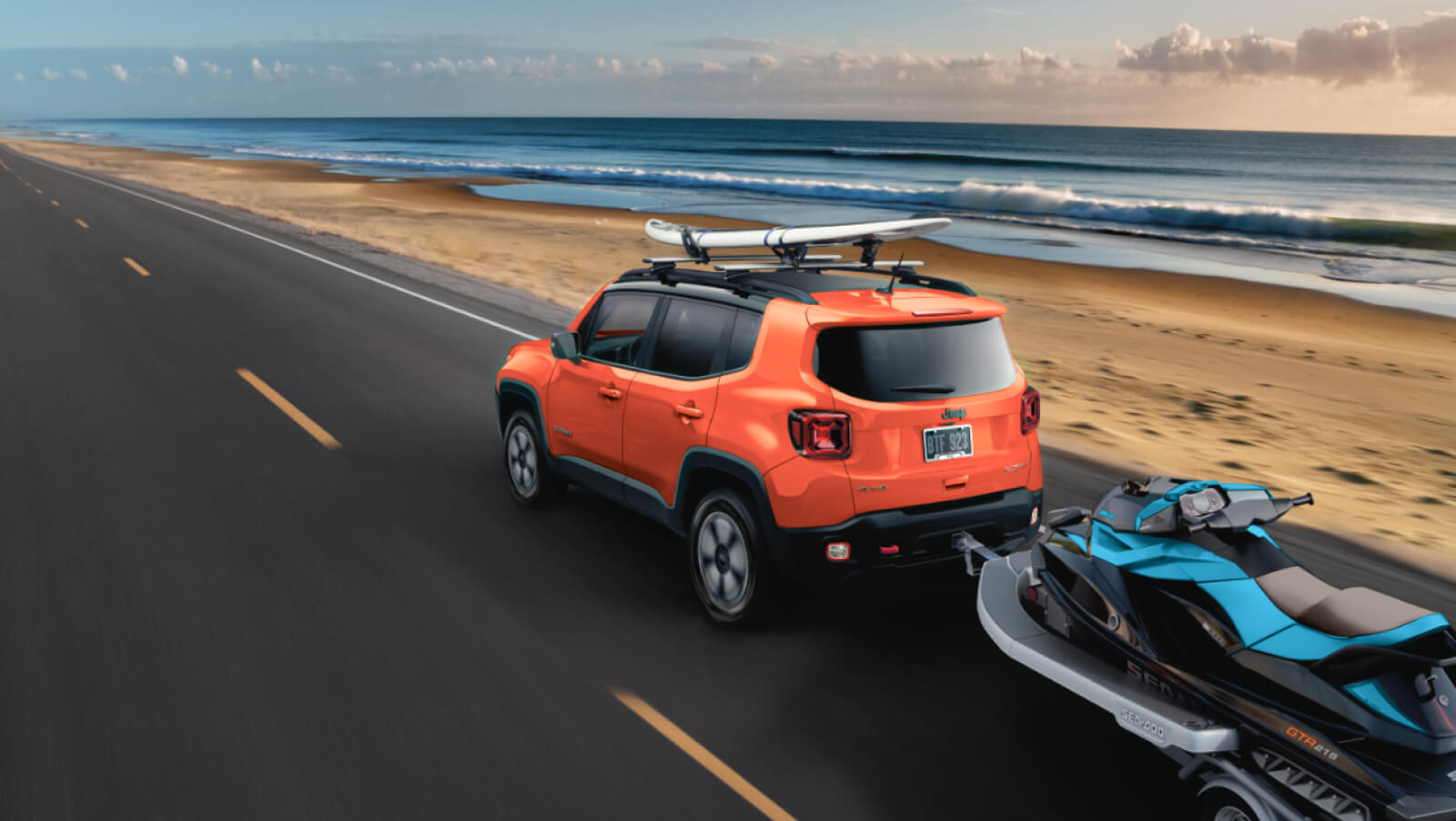
- Class II (Small Utility): Up to 3,500 lbs.: small fishing boats, pop-up campers
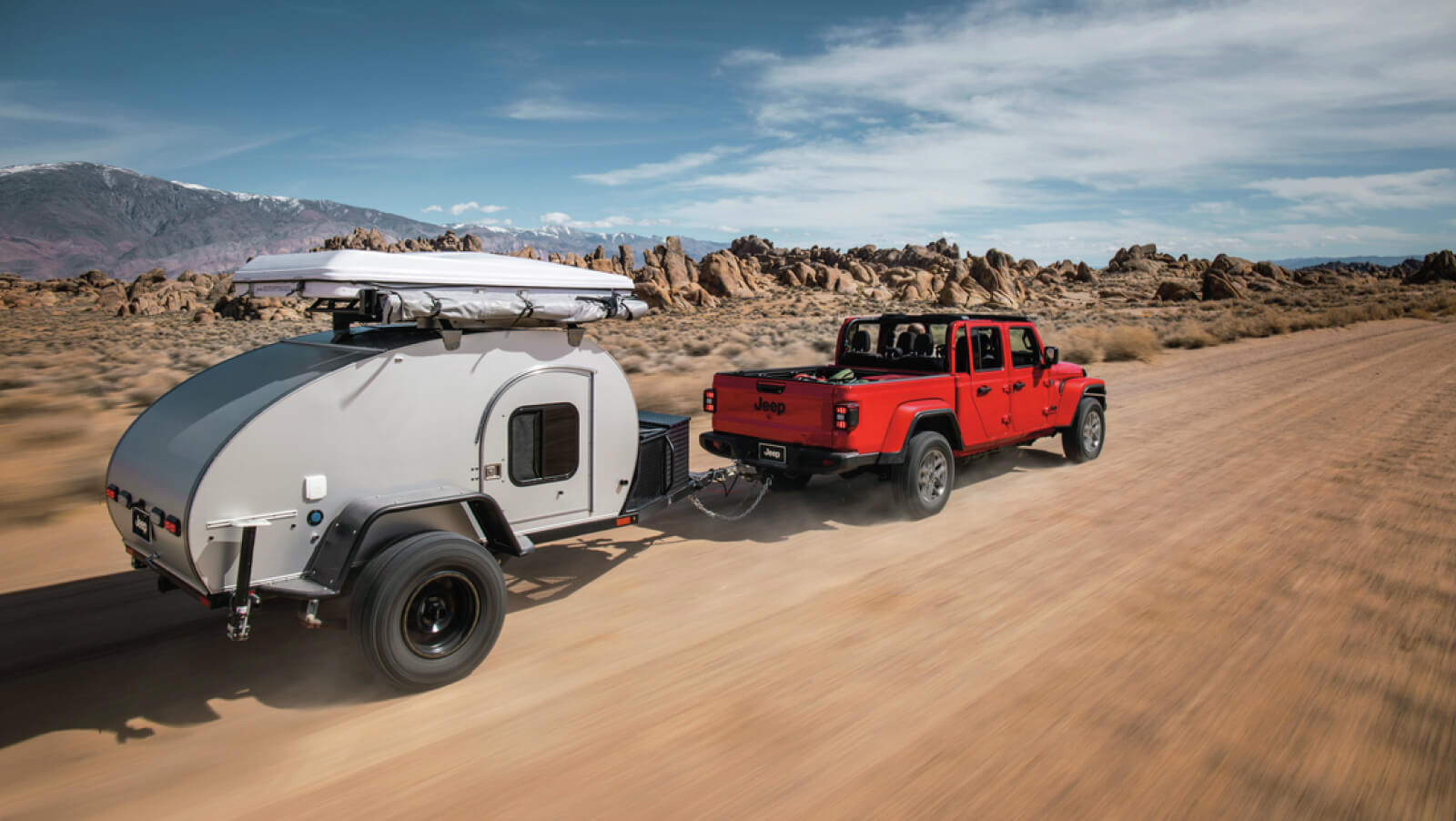
- Class III (Medium Duty): Up to 6,000 lbs.: small travel, utility, boat trailers
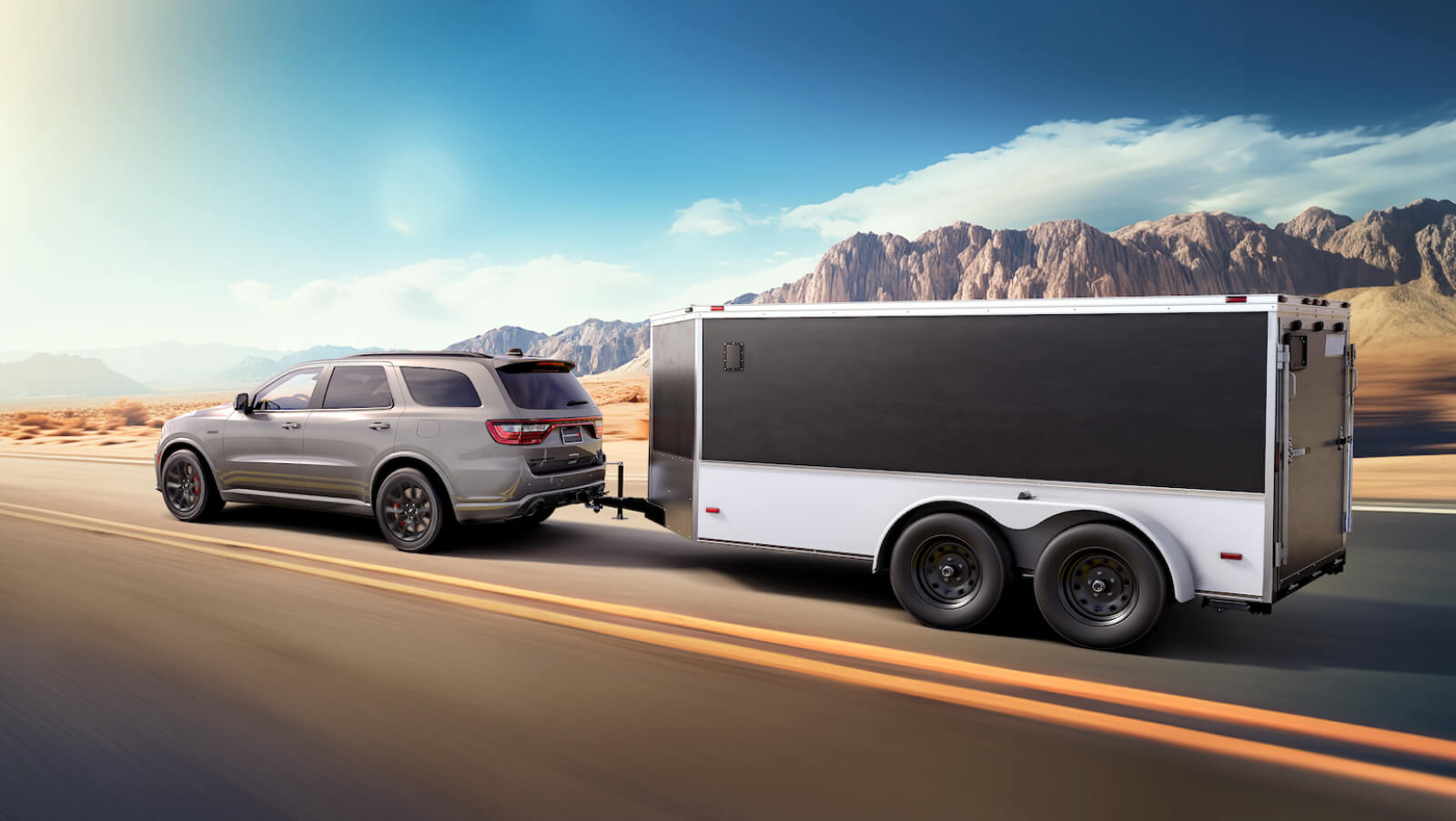
- Class IV (Heavy Duty): Up to 10,000 lbs.: large travel trailers, car haulers, horse trailers

- Class V (Commercial/Severe Duty): Up to 20,000+ lbs.: large RVs, heavy equipment trailers

How to Calculate Towing Capacity (Step-by-Step)
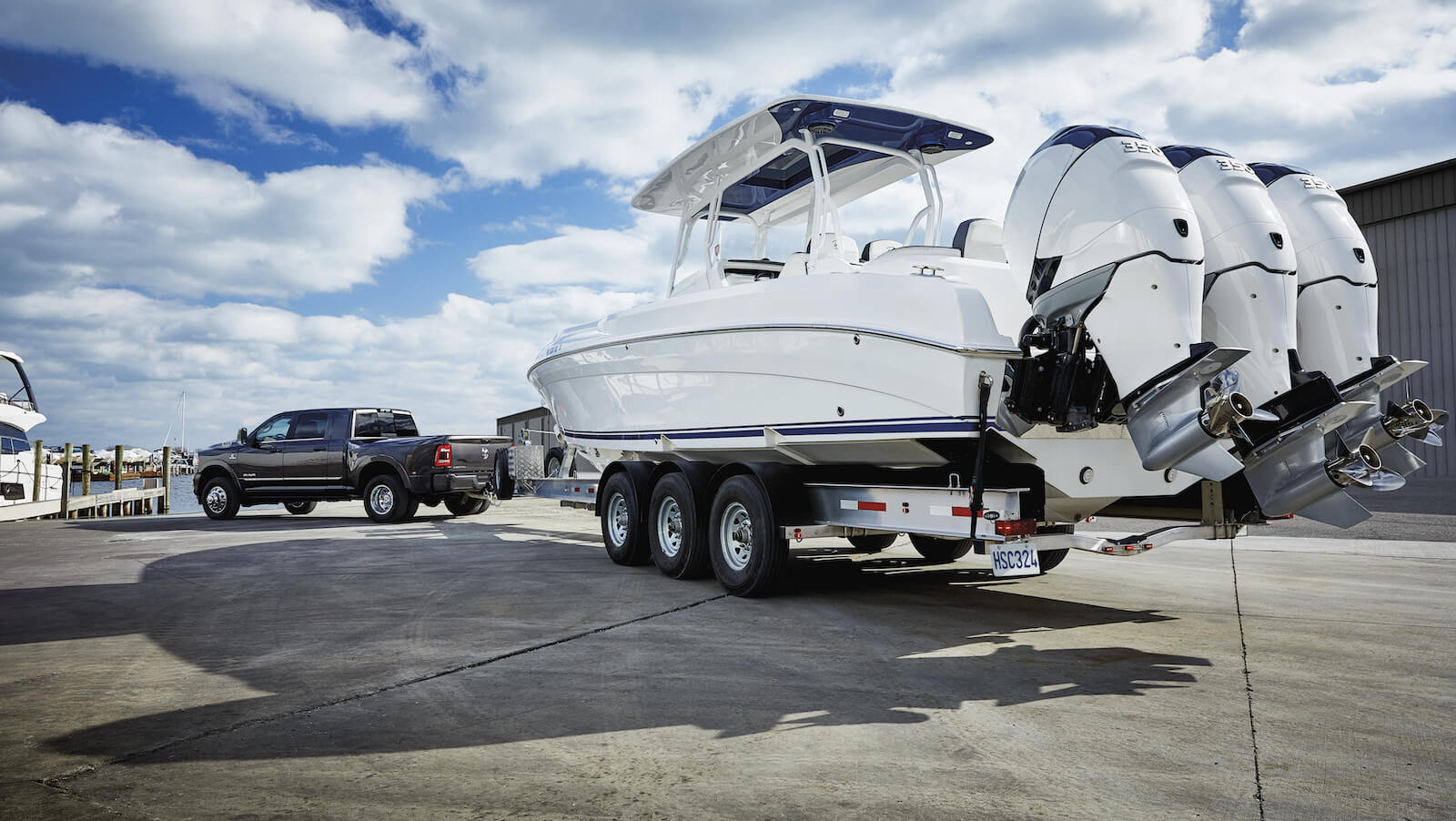
Find your Towing Capacity Guide by model:
You may also use the following towing capacity formula to subtract the vehicle’s curb weight and payload weight from its GCWR (Gross Combination Weight Rating) to find how much your vehicle can tow.
Towing Capacity = GCWR – Curb Weight – Payload
- GCWR: total allowable weight of your vehicle and trailer combined (determined by the manufacturer)
- Subtract the Curb Weight, which includes the weight of your vehicle and fuel
- If you don’t know your vehicle’s curb weight, weighing the vehicle on a scale is the most accurate way to figure it out.
- You can also figure it out by subtracting the Maximum Payload Capacity from the GVWR (Gross Vehicle Weight Rating).
Curb Weight = GVWR – Maximum Payload Capacity
- Your GVWR and GAWR (Gross Axle Weight Rating) can be found on the Safety Compliance Certification Label sticker in the driver door jamb.
- Your vehicle’s Maximum Payload Capacity can also be found on the driver-side door jamb sticker (number 2 in the illustration below).
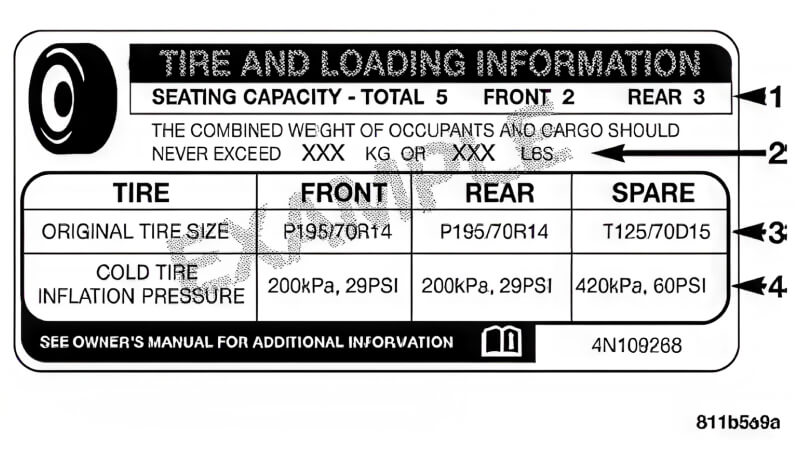
- Subtract your actual Payload, which is the weight of all passengers and cargo
If you are not weighing the vehicle on a scale, you must subtract the weight of any additional equipment added to the vehicle after production (ex. tonneau cover, bed mat/liner, etc.) from the payload capacity.
It’s also important to know that your overall towing capability is limited by its weakest link. For example, if you are using a trailer hitch or hitch ball rated at only 2,000 lbs., your towing capacity is 2,000 lbs. regardless if your vehicle is capable of much more.
How Should Trailer Weight Be Distributed?
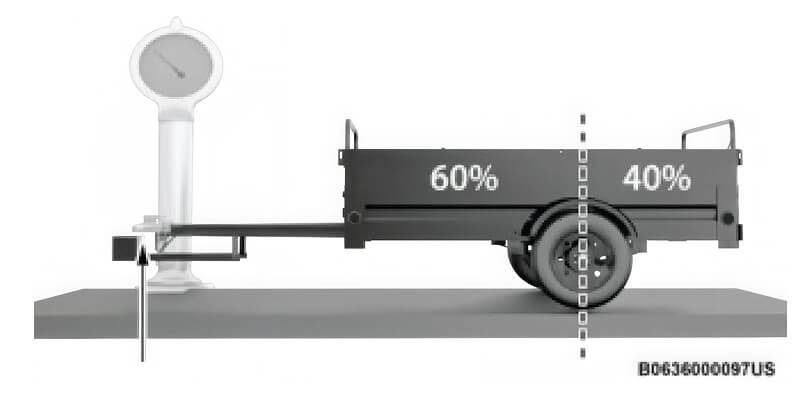
Correct weight distribution prevents dangerous trailer sway.
- Load 60% of weight in the front
- Load 40% in the rear
- Maintain 10% of total trailer weight on the hitch
Improper loading is one of the leading causes of trailer instability and accidents.
What Is Tongue Weight & Why It Matters
Tongue weight is the amount of downward force measured in pounds that the trailer's tongue exerts on your vehicle hitch. Tongue weight should be about 10 – 15% of the loaded trailer weight.
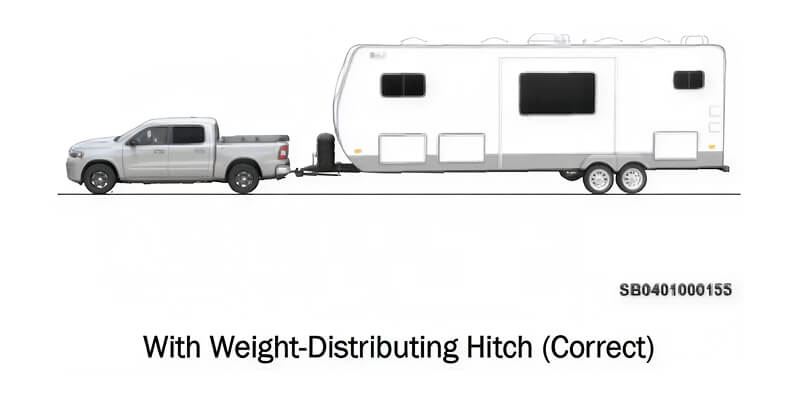
Too Much Tongue Weight Can Cause:
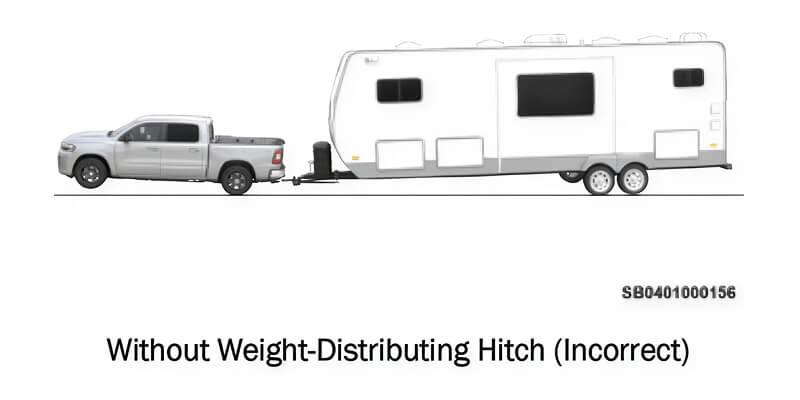
- Poor steering control as the front wheels are lifted/unweighted
- Increased braking distance
- Rear tire overload (excessive wear and/or damage)
- Excessive wear and/or damage to suspension components
- Limited nighttime visibility as the headlights aim moves up off the road
Too little tongue weight can cause:
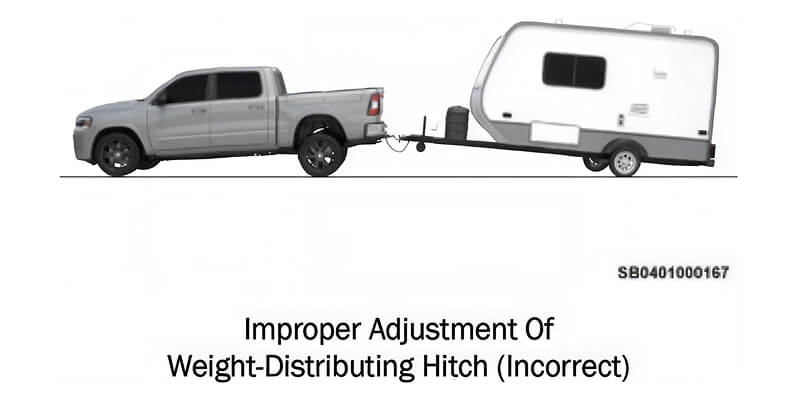
- Trailer sway
- Instability or loss of control
Balancing tongue weight is critical for safe towing performance. If there is too much tongue weight, move some of the load back behind the trailer axle(s). If there is too little, move the load forward.
What Size Receiver, Hitch Ball and Coupler Do You Need?
Stronger components are needed to move larger and heavier loads.
Receivers – what is the difference between the different sizes and classes? There are four main sizes (inner dimensions):
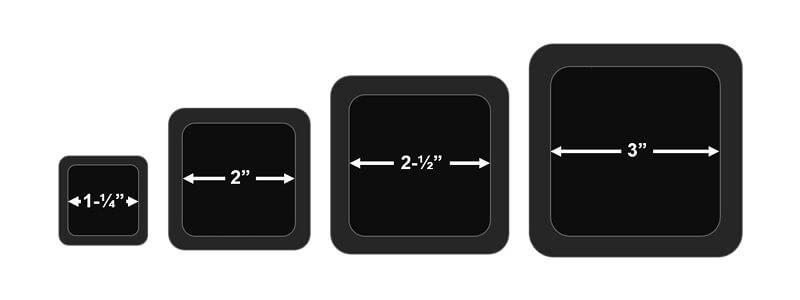
- 1¼ inches: for most cars, trucks and SUVs to tow up to:
- 2,000 lbs. (Class I)
- 3,000 lbs. (Class II)
- 2 inches: for trucks and SUVs to tow up to:
- 6,000 lbs. (Class III)
- 10,000 lbs. (Class IV)
- 20,000 lbs. (Class V)
- 2½ inches: for trucks to tow up to 20,000 lbs. (Class V)
- 3 inches: for heavy-duty trucks to tow up to 25,000+ lbs. (Class V)
Hitch Balls – there are four main sizes (ball diameter):
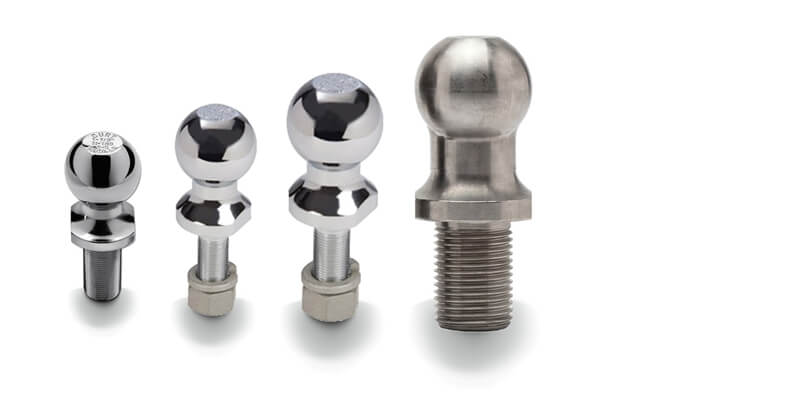
- 1⅞ inches: light duty, utility trailers at 2,000 – 3,000 lbs.
- 2 inches: boats, campers, utility trailers at 3,500 – 12,000 lbs.
- 2⁵/₁₆ inches: heavy-duty, RVs, livestock trailers at 6,000 – 30,000 lbs.
- 3 inches: heavy-duty and/or industrial towing, gooseneck, heavy equipment, livestock and/or horse trailers up to 30,000 lbs. or more
The hitch-ball must be the exact same size as the coupler, and it must be rated to tow the trailer’s Gross Vehicle Weight Rating. You can find the size and maximum towing capacity of the hitch ball stamped into the top. The size of the required hitch ball size for the trailer coupler should be stamped into the trailer coupler.
Where Can You Purchase Towing Accessories?
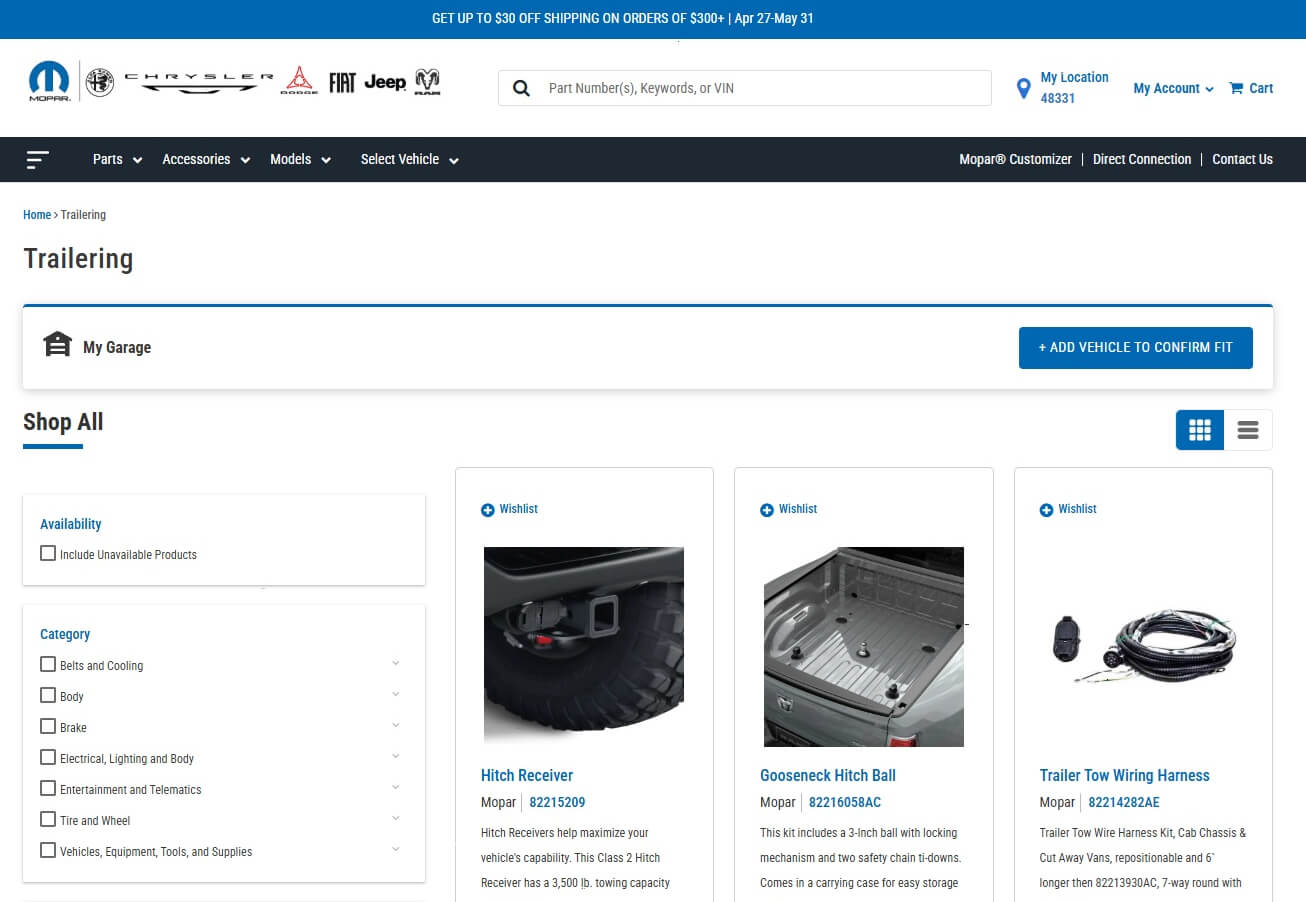
Check out the Mopar® Store/Trailering for official trailering components and accessories engineered specifically for your Chrysler, Dodge, Jeep® or Ram Brand vehicle. Here are some of the top recommended accessories for Ram trucks: 7 Mopar Towing and Hauling Accessories.
Look out for the next Mopar blog article Trailering Basics – Part 2: How to Drive with a Trailer coming soon.
Glossary of Terms
Weight & Capacity
- Curb Weight – the total weight of the vehicle with all fluids at full capacity conditions, and with no occupants or cargo loaded into the vehicle. The front and rear curb weight values are determined by weighing your vehicle on a commercial scale before any occupants or cargo are added.
- Dry Weight – weight of trailer without any cargo, fuel, water, propane, etc.
- Gross Axle Weight Rating (GAWR) – The GAWR is the maximum permissible load on the front and rear axles. The load must be distributed in the cargo area so that the GAWR of each axle is not exceeded. Each axle GAWR is determined by the components in the system with the lowest load carrying capacity (axle, springs, tires or wheels). Heavier axles, or suspension components sometimes specified by purchasers for increased durability, may not necessarily increase the vehicle's GVWR.
- Gross Combination Weight Rating (GCWR) – the total allowable weight of your vehicle and trailer when weighed in combination
- Gross Trailer Weight (GTW) – the weight of the trailer plus the weight of all cargo, consumables and equipment (permanent or temporary) loaded in or on the trailer in its "loaded and ready for operation" condition. The recommended way to measure GTW is to put your fully loaded trailer on a vehicle scale. The entire weight of the trailer must be supported by the scale.
- Gross Vehicle Weight Rating (GVWR) – indicates the maximum operable weight of a vehicle, including all components of the vehicle itself, as well as fuel, accessories, the driver and any passengers and cargo, but excluding all towing
- Maximum Payload Capacity – amount of weight your vehicle can carry, including passengers and cargo (it does not include the weight of the vehicle itself)
- Tongue Weight (TW) – the downward force exerted on the hitch ball by the trailer. You must consider this as part of the load on your vehicle.
- Towing Capacity (Maximum Trailer Weight Rating) – how much your vehicle can tow, including the weight of the trailer itself
Hitch Types
- Bumper Towing (up to 2,000 lbs.) – not used much today, installing a hitch ball to your bumper provides very limited capacity for light-duty hauling or towing
- Receiver Hitch (up to 20,000 lbs.) – hitch mounted to the frame with a rectangular slot (“receiver”) for the shank (with the hitch ball attached) to slide into
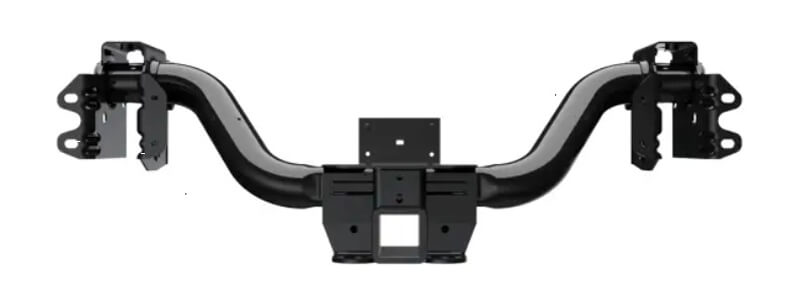
- Weight Distribution Hitch (up to 15,000 lbs.) – hitch which works by applying leverage through spring (load) bars. They are typically used for heavier loads to distribute trailer tongue weight to the tow vehicle's front axle and the trailer axle(s). This provides for a more level ride, consistent steering and brake control enhancing towing safety.
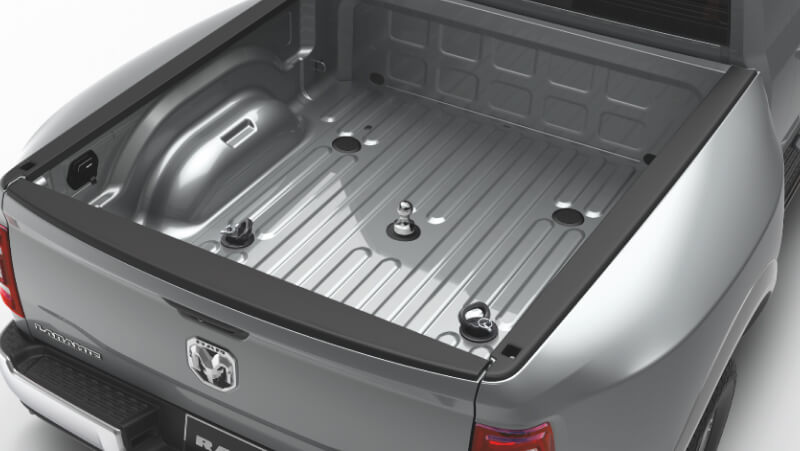
- Gooseneck Trailer/Hitch (up to 30,000 lbs.) – a heavy-duty towing system where the trailer has an extended arm over and into the bed of a pickup truck which connects to a ball in the bed for higher capacity and better maneuverability
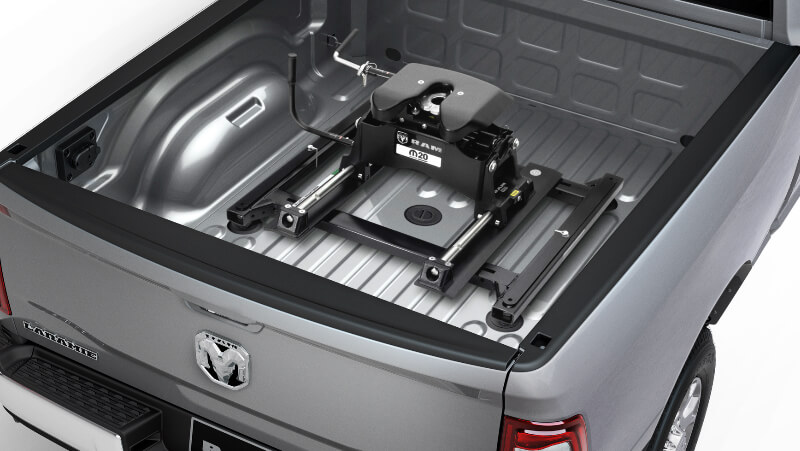
- Fifth-Wheel Hitch (up to 30,000 lbs.) – similar to a gooseneck, it’s a heavy-duty towing system where the trailer has an extended arm over the bed, where a kingpin sticks out below, the fifth-wheel hitch is installed in the bed which sticks up and locks in with the kingpin providing superior strength, stability and smoother ride
Hitch Equipment
- Hitch Ball – is a steel ball (mounted to the hitch shank installed into your vehicle’s trailer hitch) which securely connects to the trailer’s coupler. Periodically check your hitch ball and apply a light coating of grease to eliminate noise, help make connecting and disconnecting easier and prevent corrosion.

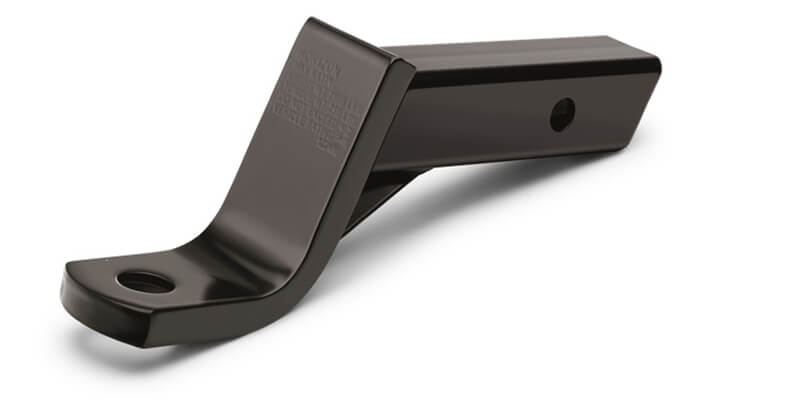
- Hitch Shank/Ball Mount – a heavy-duty steel squared tube to which the hitch ball is mounted. It slides into the hitch receiver and is secured with a pin.
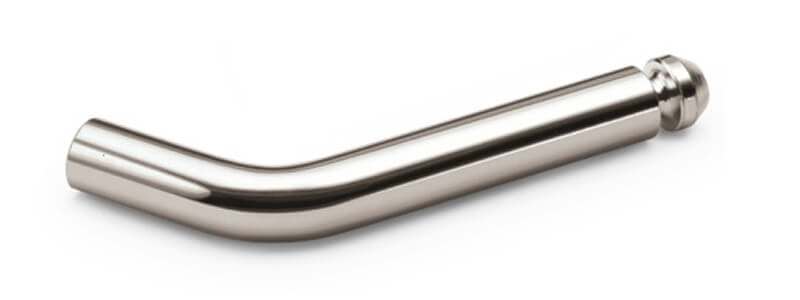
- Hitch Pin – a metal fastener, often L-shaped, used to secure a shank/trailer ball mount, agricultural implement or accessory into a towing receiver, preventing it from sliding out during transport
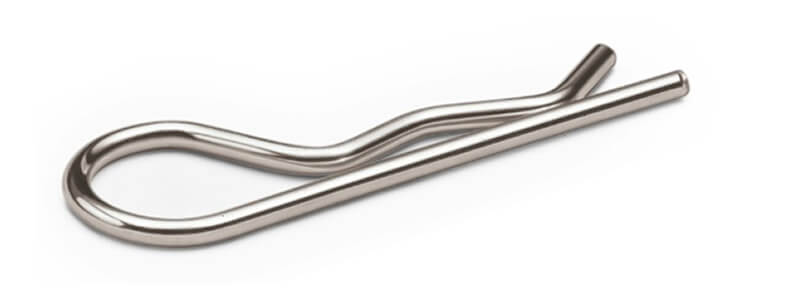
- Cotter Pin – clip used to secure the hitch pin into the receiver
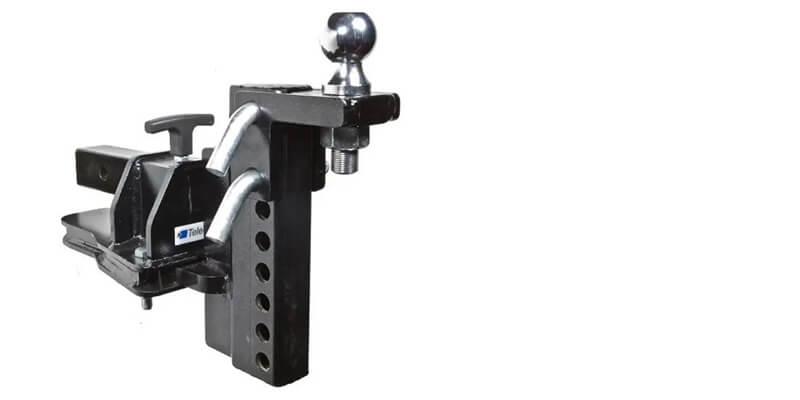
- Drop Hitch – specialized mount which lowers the hitch ball height when the trailer coupler is lower than the tow vehicle’s hitch for safe towing
- Rise Hitch – specialized mount which raises the hitch ball height when the trailer coupler is higher than the tow vehicle’s hitch for safe towing
- Adjustable Ball Mounts – if you tow multiple trailers with varying coupler heights, this mount allows you to adjust the hitch ball height as needed for each trailer to maintain a level trailer for safe towing
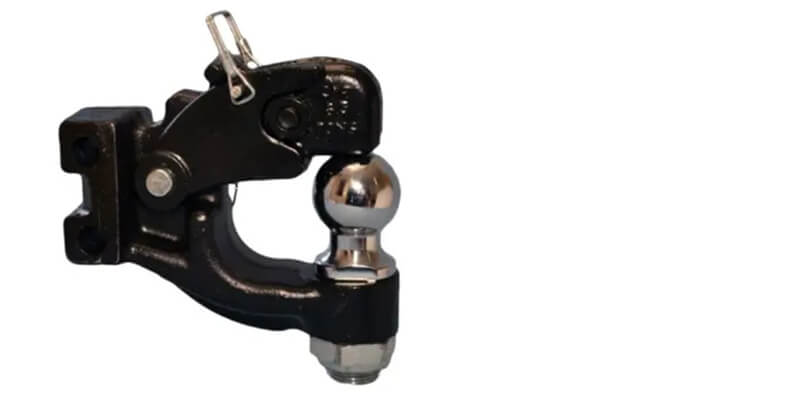
- Pintle Hitch – a heavy-duty towing system using a hook and ball known for superior strength, extreme durability and high articulation for heavy-duty, off-road or industrial towing with construction trailers, machinery or agricultural equipment
- Coupler – connector which secures the trailer over the hitch ball
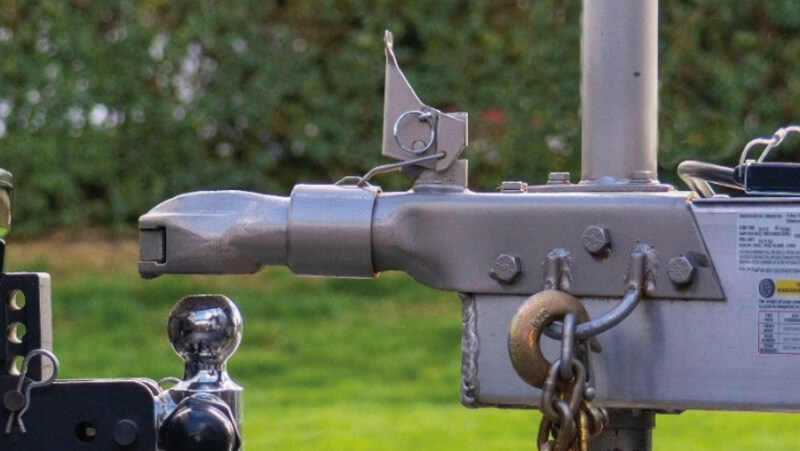
- Locking Lever – mechanism which secures or releases the coupler from the hitch ball

- Adjusting Nut (locking nut) – nut on the coupler which loosens or tightens the locking mechanism, securing the hitch ball within the coupler
- Trailer Brakes – brakes on the trailer that help slow the trailer, which can help prevent jackknifing; different types include electronic, surge or electric over hydraulic
- Trailer Chains – connected to the trailer, they are to be criss-crossed under the hitch and connected to the opposite side of the vehicle so that they catch the tongue in case the coupler fails. Make sure they meet the load requirements, do not drag on the ground and the hooks have safety latches.
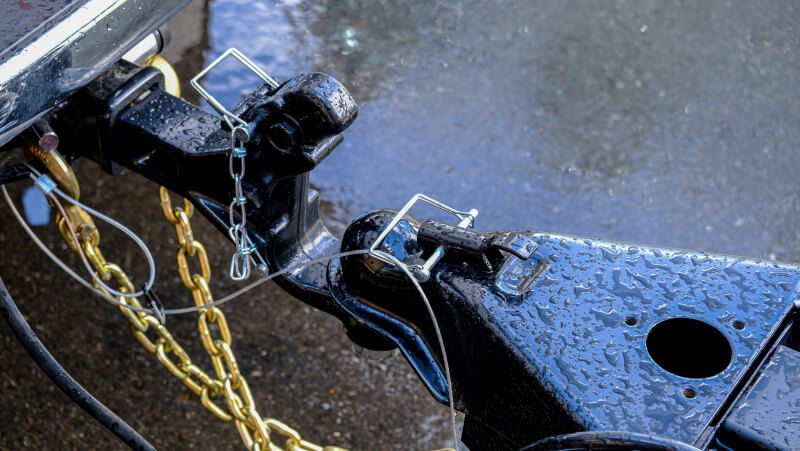
- Trailer Jack – a device used to raise and lower the trailer's tongue (the front part) for coupling and uncoupling from a towing vehicle, as well as for supporting the trailer while parked and for leveling the trailer during setup. Common types include manual (hand-crank), electric and hydraulic jacks.

- Trailering/Tow Mirrors – extend out further than standard mirrors, providing a wider view to see the trailer better eliminating blind spots for improved safety and maneuverability
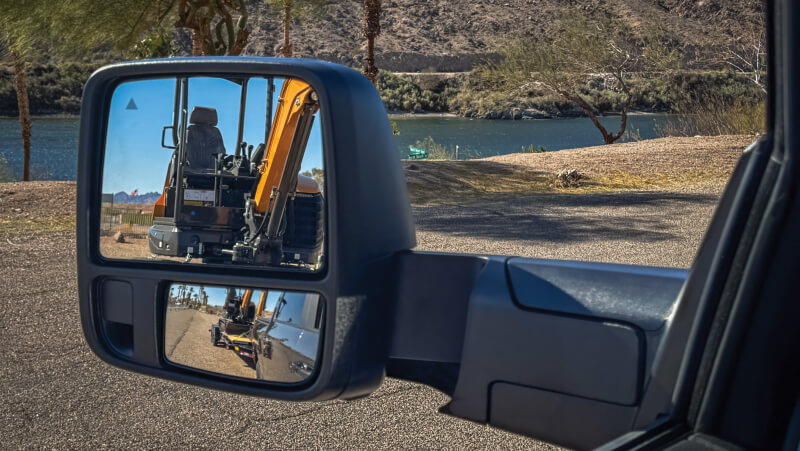
- Temporary – these attach to existing mirrors and are less expensive
- Permanent – these replace your existing mirrors and may include other available features like folding or telescoping
- Trailer/Tow Wiring Harness – connects your vehicle to the trailer providing power to operate various trailer safety features
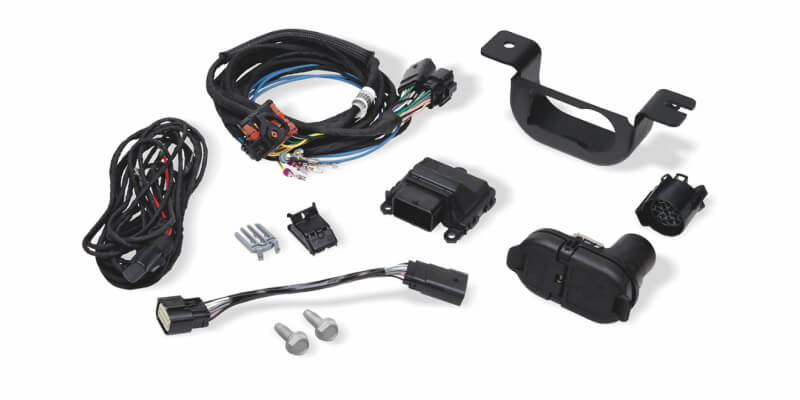
- 4-Way (4-pin) Harness – typically for smaller/lighter trailers to operate turn signals and brake lights
- 7-Way (7-pin) Harness – typically for heavier trailers requiring electric brakes, reverse lights and auxiliary power

Related Posts
Lorem Ipsum
Lorem ipsum dolor sit amet, consectetur adipiscing elit, sed do eiusmod tempo
Lorem Ipsum
Lorem ipsum dolor sit amet, consectetur adipiscing elit, sed do eiusmod tempo
Lorem Ipsum
Lorem ipsum dolor sit amet, consectetur adipiscing elit, sed do eiusmod tempo
Lorem Ipsum
Lorem ipsum dolor sit amet, consectetur adipiscing elit, sed do eiusmod tempo
Lorem Ipsum
Lorem ipsum dolor sit amet, consectetur adipiscing elit, sed do eiusmod tempo